
"tree plains"
2000 article(s) found

La Minita Flower God, La Tisa Manor, Farahan Plateau, Guatemala
To really understand the flavor changes and product differences of coffee beans is to understand the production place and growers, different manors with different flavors, or different flavors on different hills of the same manor, and the story behind each coffee bean is what the fragrance wants to know. It can be traced back to which plot of the estate where the beans came from, or which cooperative or which farmer, chasing the flavor of the region. To

How to drink Nicaraguan Javanica Coffee in the New season
Professional coffee knowledge exchange more coffee bean information please follow the coffee workshop (Wechat official account cafe_style) Nicaragua is located in central Central America, China and the United States is the largest country, north of Honduras, south of Costa Rica, east of the Caribbean Sea, west of the Pacific Ocean. The eastern part is the coastal plain, the high temperature and rainy climate is tropical maritime climate, and there are many jungles and swamps in the west.

El Salvador location, El Salvador Coffee introduction
Follow the caf é (Wechat official account vdailycom) and found that the Beautiful Cafe opened a small shop of its own in El Salvador's geographical location: located in the north of Central America. It is bordered by Honduras to the north, the Pacific Ocean to the south, Guatemala to the west and northwest, and the Gulf of Fonseca in the Pacific to the east. The smallest and most populous country in Central America. The topography is dominated by mountains and plateaus, with many volcanoes and Shengan.

Popular science | introduce you to coffee from Central American countries (part two)
For the exchange of professional baristas, please pay attention to the coffee workshop (Wechat official account cafe_style). The latitude of Guatemala is about 15 degrees, because of the long mountains and great regional climate change, which has created the eight major coffee producing areas of the country, all located on the highland topography in the subtropical climate, with rich and stable rainfall and fertile volcanic ash soil.

An introduction to the History of growing Coffee beans in Angola
Following Cafe (official Wechat account vdailycom) found that coffee revenue was once one of the main sources of revenue for the Angolan treasury, and coffee production provided a large number of jobs in the country. Before the independence of Angola, coffee growers produced 5000 tons of coffee beans per year. In order to increase coffee production, the country needs to provide more production tools,

Planting skills of herbaceous coffee trees
First, planting time: April 15-25 period. Second, planting location: plain, hillside, wasteland, front and back house, forest and fruit tree seedlings can be planted, but should not be planted in tall trees or other unventilated places. Third, herbal coffee does not like flood and fertilizer, conditional planting can use farm manure, during the growth period, it is best to irrigate 1-2 water during the growth period, absolutely do not allow the use of all kinds of chemical fertilizers and
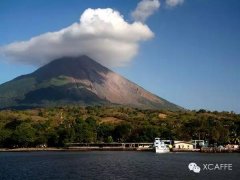
Lemon Tree Estate, Nicaragua
Nicaragua is located in the middle of Central America. It is the largest country in Central America. It borders Honduras in the north, Costa Rica in the south, the Caribbean Sea in the east and the Pacific Ocean in the west. Its eastern coastal plain, high temperature and rainy tropical marine climate, multi-jungle swamp; western coastal lowlands, there are more active volcanoes. The central and northern parts are highlands, with an annual average temperature of 18℃ and annual precipitation of 1500~2500 mm.

What are the famous manors in Guatemala? Visit Guatemala producing areas and manors and eight major producing areas
To really understand the flavor changes and product differences of coffee beans is to understand the production place and growers, different manors with different flavors, or different flavors on different hills of the same manor, and the story behind each coffee bean is what the fragrance wants to know. It can be traced back to which plot of the estate where the beans came from, or which cooperative or which farmer, chasing the flavor of the region. To

Guatemala Coffee Manor Flavor Manor introduction to Incht Manor
Guatemala is famous for producing high-quality beans, which is the highest elevation and dry climate in the coffee growing area of the country. Located in a rare non-volcanic area in China and the United States, the mountains are potholed and the terrain is very dangerous. Although nearly 2000 meters above sea level, the warm, dry air from the plains of Mexico protects coffee trees in the area from frost.

Rich aroma of La Tisa Manor Coffee in Guatemala an introduction to the price characteristics of coffee varieties in producing areas
Guatemala is located in the center of North and South America, and its geographical location occupies an important position in Central America. Guatemala covers an area of about 108899 square kilometers. The land features can be divided into plateau volcanoes, lowland tropical forests, volcanic sandy shore plains along the Pacific coast, and virgin lands along the Caribbean Sea. The SierraMadre Mountains of Central America span east and west of Guatemala, covering an area of

Panamanian Coffee Plantation Aleida Plantation Region Baru Volcano
Arusha is located in the gentle rolling hills of Mount Meru, in Tanzania's largest coffee-growing estate. To the north of Arusha lies the Arusha National Park, which houses Mount Meru and the famous Ngorogoro Crater at its base. To its northwest lies the Serengeti Plain. It's a peaceful haven before and after a safari adventure. Arusha Coffee Estate

Introduction to the fragrant Ecuadorian Coffee Flavor and the Fine Coffee in the Manor area
Ecuador is divided into the western coast, the central mountains, the eastern Amazon River basin and the four central regions of the Galapagos Islands, with diverse climatic conditions. The western coastal plain belongs to the tropical rain forest climate, with an average temperature of 23-25 ℃. The central Andes. The intermountain basin in this area belongs to the savanna climate, and the mountain belongs to the subtropical forest climate, with perennial snow above 4000 meters above sea level. Annual average decline

Introduction to the flavor and taste characteristics of Nicaraguan lemon manor coffee with fragrant flavor
Nicaragua is located in the central part of Central America, bounded by Honduras in the north, Costa Rica in the south, the Caribbean Sea in the east and the Pacific Ocean in the west, with a total area of 130400 square kilometers. Topography: the central part of Nicaragua is a highland; the east is a coastal plain with many jungle swamps and low-lying terrain; the west is a coastal lowland with many volcanoes and lakes in the east. [4] the climate of Nicaragua Plain is high.

An introduction to the characteristics of coffee flavor and taste in the aroma and mellow aroma of Ethiopia's Xida Motede Manor.
There are mainly mountain plateaus in Ethiopia, and the central and western regions are the main part of the plateau, accounting for 2% of the whole territory. The East African Rift Valley runs through the whole territory, with an average elevation of nearly 3000 meters, which is known as the roof of Africa. The terrain around the plateau is gradually declining. The Darol depression in the north fell to 113 meters below sea level, the lowest point in the country. A narrow banded plain along the coast of the Red Sea

A profound and mysterious description of the flavor of Guatemala's Agua Durse coffee beans
Guatemala is located in the center of North and South America, and its geographical location occupies an important position in Central America. Guatemala covers an area of about 108899 square kilometers. The land features can be divided into plateau volcanoes, lowland tropical forests, volcanic sandy shore plains along the Pacific coast, and virgin lands along the Caribbean Sea. The SierraMadre Mountains of Central America span east and west of Guatemala, covering an area of

Fraijanes producing area Story of Guatemala Palencia San Guayaba Saint Guava Manor Cafe
Professional coffee knowledge exchange more coffee bean information please follow the coffee workshop (Wechat official account cafe_style) Guatemala Farrakhan Nice producing area Saint guava Manor Pacamara washing (half pound) Guatemala Fraijanes Palencia San Guayaba Pacamara washed 2017 Guatemala COE fifth place Fahannis Fraijanes fire

Coffee bean boutique Kaddura, Kaduai, bourbon in Arabica Guatemala Vivetnam fruit producing area
The Republic of Guatemala, a presidential republic in Central America, is located in the south of the North American continent. It is bordered by the Pacific Ocean to the west, the Caribbean Sea to the east, Mexico to the north, Belize to the northeast, Honduras and El Salvador to the southeast, with a total area of 108889 square kilometers. All of Guatemala is made up of mountains and plateaus. In the west, there are Kuchu Matanes Mountains.

Introduction to the characteristics of high-quality coffee beans in the producing area of Ecuadorian coffee with balanced acidity
Ecuador is divided into the western coast, the central mountains, the eastern Amazon River basin and the four central regions of the Galapagos Islands, with diverse climatic conditions. The western coastal plain belongs to the tropical rain forest climate, with an average temperature of 23-25 ℃. The central Andes. The intermountain basin in this area belongs to the savanna climate, and the mountain belongs to the subtropical forest climate, with perennial snow above 4000 meters above sea level. Annual average decline

Moderate acidity, fragrant and delicious lemon tree manor in central Central America in Nicaragua
Nicaragua is now one of the poorest countries in Central America. Due to its poor economic foundation, the coffee industry is still relatively backward, while coffee farmers are in extreme poverty. Fortunately, Nicaraguan coffee has received some foreign aid funds to improve the quality of its coffee. Coffee from Madagelba, Sinodega and Segovia in Nicaragua